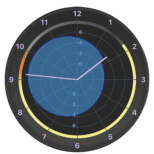
Tide data
The UK and Ireland tide data comes from the Admiralty maritime data solutions the tide data used in the tide clock is from the same data source as easytide web site, but is available for upto 360 days ahead. For all other locations around the world the data comes from Worldtides.info which uses a variaty of souces including the NOAA.
Please note: It is the user’s responsibility to ensure that the data is suitable for their intended purpose and must not be used by vessels for navigation. We can provide no guarantee as to the accuracy of the data.
See the EasyTide FAQ for frequently asked questions about tides.
About tides
Tides are a complex system, in the UK we are used to two tides a day, but other locations in the world they get only one tide a day, there are lots of factors apart from astronical effects, the sea bed, the coastal shape, the tide in an estuary will have a very different tide to a beach facing the ocean.
The tidal curve (how the tide goes from low water to high water) can behave in unexpected ways. From Cowes to Swange you get a prolonged high tide or double high tide, which creates some funky curves that change depending on factors such as neaps and springs. The UKHO use tide gauges which monitor the tides for several years in order to calculate the curves and Tide clock stores the curve in 12 minute intervals.
For those wishing to understand more about tides, we recommend reading “Tides – The science and spirit of the Ocean” by Jonathan White.
See NASA Tide animation
and Tidal cycles – Diurnal, Semidiurnal and Mixed Semidiurnal, see NOAA – Tides and Water Levels
How are tide heights calculated?
The UKHO uses “Chart Datum” as a baseline when providing predictions for tide heights. Chart Datum is the plane to which all tidal heights in the UK are referred. It is also the plane below which all depths are published on a navigational chart, so adding the tidal height to the charted depth gives the true depth of water.
In the United Kingdom, Chart Datum is normally approximately the level of Lowest Astronomical Tide (LAT). This is the lowest level which can be expected under average weather conditions. However, it is not an absolute minimum and storm surges can cause significantly lower levels to occur.
Tide height predictions for standard ports are provided in the detailed tide tables published by the UKHO. These tables show the height above Chart Datum of each tide for each day of the year.
Tide height predictions for secondary ports can be calculated by applying an average adjustment to the tide height for the relevant standard port. For example, the high tide at a secondary port might be +0.2 metres higher on average than the high tide at the relevant standard port.
It’s important to remember that tide predictions are always given in metres above Chart Datum. The actual depth of water will depend on the charted depth shown on navigational charts.
Why do tide times and heights differ from other tide tables / websites?
Tidal data is available from a number of different sources, it is traditionally measured using physical in-situ tide gauges, and this is the historical method used for getting the most accurate tidal data. These locations are displayed in blue. Some Worldtides locations come from AVISO+ which use primarily satellite altimetry and a limited number of tide gauges and these are shown in teal.
Most tide table websites are strangely unclear about exactly how or where they get tide times, but we use the Admiralty for the UK and Ireland as it is the most accurate tide data for the UK.
We asked the Admiralty whats involved in location tidal forecast, they said:
To be able to include new predictions at any location would first require the installation of suitable recording equipment (a tide gauge) that can be left in-situ, to measure and record the tidal levels over a suitably long enough period, at least one month, or preferably much longer (say one year). These observations would then be analysed in order to derive the necessary underlying data allowing for the future predictions to be calculated (i.e the ‘harmonic constants’ and / or time and height differences as so described in the above image). The analysis procedure ensures the robustness of those derived constants to ensure they are ‘fit for purpose’ to be used in calculating predictions.
To base any prediction on just visual observations alone could potentially be misleading and therefore dangerous.